Synchronic Pasts: Comparing Ancient and Early Modern Antiquarianism
Valentina Arena and Antonino Pittà
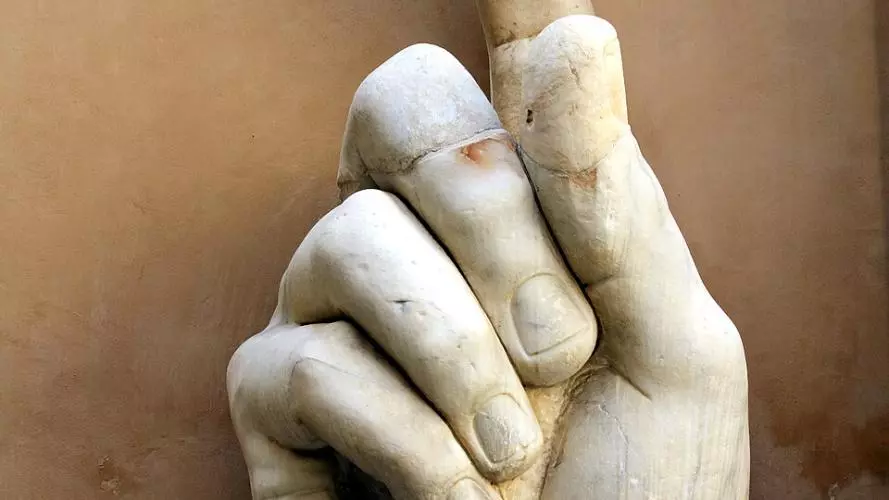
A witty passage from Denis Diderot’s satirical novel Les bijoux indiscrets (1748) ridicules those who attempt to reconstruct the scant remains of the past. They are portrayed as dwarfish figures, spectacles perched on their noses, searching for fallen fragments of ancient statues, only to reassemble them incorrectly during restoration: an ear where a nose should be, and a nose where an ear belongs.
As the exhibition Broken, currently on display at Palazzo Strozzi in Florence, powerfully demonstrates, the fragment, whether a trace of a lost text, a shard of a vanished vessel, or the ruin of a building, is not simply a surviving vestige of something that has disappeared. It can be a whole in itself, a form of thought, a mode of resistance, or even the only viable expression of a fractured world that rejects completeness and definitive meanings (Theodor W. Adorno, Minima Moralia: Reflexionen aus dem beschädigten Leben, 1951). It may also possess an aesthetic of its own, while forming part of a more complex constellation of fragments. Above all, fragments can liberate the mind from preconceived interpretations, while their unexpected juxtapositions can offer insights that continuous narratives may obscure (Walter Benjamin, Das Passagen-Werk, 1982). They can unleash an extraordinary imaginative force, challenging established frameworks and opening up a world of possibilities. As Goethe observed in 1804, ‘We are always annoyed, when a half-buried ruin is excavated. At most, that may benefit scholarship, but at the expense of imagination’ (Essays on Art and Literature: The Collected Works of Goethe, 1986).
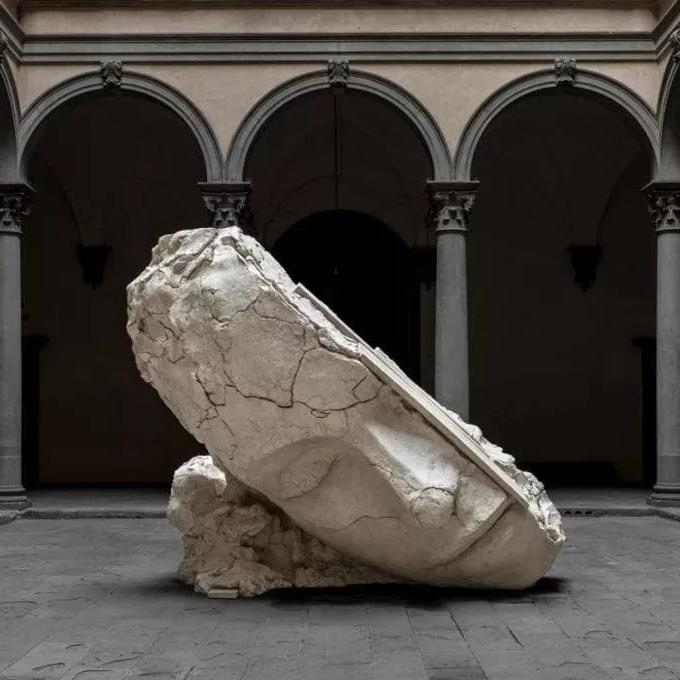
From the fifteenth century onwards, a major intellectual enterprise emerged in Europe, centred on fragments as traces of the past and on the possibility of reconstructing that past by restoring them to a larger whole. This lay at the heart of the humanist project often referred to as ‘antiquarianism’. Scholars set out to gather, describe, and reconstruct surviving traces of the lost classical world, confronting evidence that was often profoundly complex and ambiguous. The very name of this enterprise evokes Varro’s monumental work, the Antiquitates rerum humanarum et divinarum, a treatise concerned with the institutions, practices, beliefs, and traditions that constituted Roman life, and with the recovery of their origins and development. Varro and other authors of the Roman Republic, now labelled as ‘antiquarians’ by analogy with their early modern counterparts, pursued this endeavour through the study of language, religious traditions, institutions, and inherited accounts of the past.
Yet these very works that might have offered the greatest assistance to later scholars had themselves been almost entirely lost or survived only in scattered fragments. Jurists, historians, grammarians, poets, and artists therefore faced the challenge of making sense of dispersed evidence, assembling them like pieces of a puzzle in an attempt to recover a larger picture. By analogy with Varro’s Antiquitates, the term ‘antiquarianism’ came to designate this broad field of inquiry, encompassing the study of inscriptions, coins, works of art, and literary, legal, and informal writings, all subjected to critical scrutiny. Our understanding of antiquity still owes much to these pioneering and often tentative explorations of the uncharted territory of classical fragments.
Yet the task of recovering and interpreting the remains of a largely unknown past was a complex undertaking in the ancient world itself. When confronted with the need to reconstruct their own past, classical authors struggled no less than their early modern counterparts. Scholars active during the last centuries of the Roman Republic, particularly from the late third to the first century BCE, devoted themselves to investigating the origins, meanings, earliest attestations, and subsequent transformations of language, topography, customs, rituals, laws, food, clothing, and the calendar. Their ambition was to develop a comprehensive understanding of the structures and practices of Roman life. From the outset, however, they had to navigate troubled waters: evidence that was elusive, inconsistent, and incomplete, sometimes suspected of being forged or, at best, shaped by the biases of those who had transmitted it.
Authors such as Aelius Stilo, Marcus Terentius Varro, and Verrius Flaccus sought to recover the world of early Rome through vanished inscriptions, obscure words, and ancient ritual and magical formulae, tracing archaic usage preserved as linguistic ‘fossils’ in early poetry and spoken Latin. In their efforts to produce a plausible account of Rome’s venerable past, and to organise and interpret the surviving evidence, they inevitably worked within the intellectual and historical frameworks of their own time. Consequently, what they produced was not so much a reconstruction as a construction: a particular image of a remote past which, though never entirely effaced, could no longer be directly recovered.
To date, no comprehensive edition exists of the fragments of the Roman Republican antiquarians, whose work established new ways of organising knowledge and, in doing so, shaped understandings of the world both for their contemporaries and for subsequent generations (our ERC-funded project Ordering, Constructing, Empowering: The Fragments of the Roman Republican Antiquarians, or FRRAnt for short, grant number 866400, is currently working to fulfil this desideratum). To understand this phenomenon fully, it is essential to consider not only what was studied but, more importantly, how it was studied. What is needed, to borrow Peter Miller’s influential formulation, is an understanding of the ‘morphology of antiquarianism’: the distinctive forms, structures, and practices through which antiquarian knowledge was produced. Such an approach must move beyond the classification of subjects and literary forms to examine the intellectual operations that constituted antiquarian inquiry itself.
The conference ‘Synchronic Pasts: Comparing Ancient and Early Modern Antiquarianism’, held in Rome from 15 to 17 June 2026, was conceived precisely to investigate the morphology of ancient antiquarianism through comparison with the forms, structures, and practices of early modern antiquarianism. How far did their methods overlap? How did their attitudes differ? Where did they converge, and where did they diverge? Answering these questions requires observing antiquarians at work, as they confront comparable objects of inquiry.
The conference, organised by Valentina Arena with Antonino Pittà, Martina Farese, and Giorgio Piras within the framework of FRRAnt, and in collaboration with Sapienza Università di Roma and the Associazione Italiana di Cultura Classica, brought ancient and early modern antiquarian approaches into direct comparison. Presentations were paired to explore how scholars of the late Republic and the Early Modern period approached similar subjects, including language, ritual, law, and topography. These shared objects of inquiry provided the basis for each comparison, allowing similarities and differences in method to emerge from the analysis of concrete scholarly practices.
Two keynote lectures, delivered by William Stenhouse and Peter Miller at the opening and closing of the conference respectively, provided a broader theoretical framework for the discussions. Their complementary contributions illuminated the scope, implications, and tensions inherent in antiquarian inquiry. Stenhouse examined the sense of loss central to the antiquarian mindset, showing how the desire to recover elements of the ancient world was inseparable from an awareness of what had irretrievably disappeared. Miller, in turn, explored the tensions between the recovery, construction and conservation of the past, drawing attention to the ways in which historical interpretation is shaped by subjective elements, such as the authors’ longing for, and idealisation of, antiquity. Driven by such emotions, antiquarians may shape and preserve views of the ancient world that primarily mirror their own perspectives and concerns: the more impartial they strive to appear, the more ‘personal’ their accounts become.
The first object examined was ‘Language’. From an antiquarian perspective, the history of language emerges as a kind of Wunderkammer: a repository of unusual usages, irregular and obsolete forms, and other linguistic curiosities (Anna Chahoud), but also a source of evidence for humanists seeking to reconstruct the historical development of Latin (Clementina Marsico). The comparison revealed significant methodological affinities between ancient and early modern antiquarians, such as their reliance on ancient inscriptions and artefacts to reconstruct original spellings and their awareness that archaic linguistic forms were most likely to be preserved at the periphery of the Roman Empire (Antonino Pittà).
The question of ‘Clothing’ presented a comparable challenge: that of recovering the original form of the Roman toga, a defining symbol of Roman identity that had already undergone significant transformations by Varro’s time, and of establishing the precise meaning of the terminology used to describe ancient dress. The latter concern was central to Renaissance treatises such as Lazare de Baïf’s De re vestiaria, discussed by Damiano Acciarino. In both cases, philological analysis of ancient sources served as a means of reconstructing both the forms and the vocabulary of Roman clothing.
The ‘Fasti’ emerged as particularly complex and multifaceted objects, functioning simultaneously as calendars, historical records, material artefacts, instruments of antiquarian research, and antiquarian compilations in their own right (Tim Cornell). Their interpretation was further complicated by misidentifications and outright forgeries, as illustrated by Ginette Vagenheim’s discussion of Pirro Ligorio and the discovery of the Fasti Capitolini in 1546. Early modern antiquarians were acutely aware of the historical, heuristic, and ideological significance of the ancient Fasti, to the point of imitating and, at times, even forging them. Along similar lines, Daniele Miano examined how ancient monuments (including forged ones, such as the purported tombs of mythical founders) could be used to construct antiquarian genealogies for Italian cities such as Padua.
‘Statutes’, too, proved to be multifaceted objects, revealing two complementary dimensions of the relationship between legal tradition and antiquarian knowledge (Pierangelo Buongiorno). On the one hand, reconstructing the origins and earliest meanings of laws, customs, and legal procedures was essential to the work of Roman jurists; on the other, their compilations provided Roman antiquarians with indispensable sources and methods. Yet the antiquarian impulse so evident in other fields of inquiry was not necessarily central to legal scholarship. Italian jurists of the late Middle Ages and Renaissance, for example, were often less concerned with recovering the original meaning of Roman statutes than with adapting Roman law to contemporary needs, prioritising practical applicability over historical accuracy.
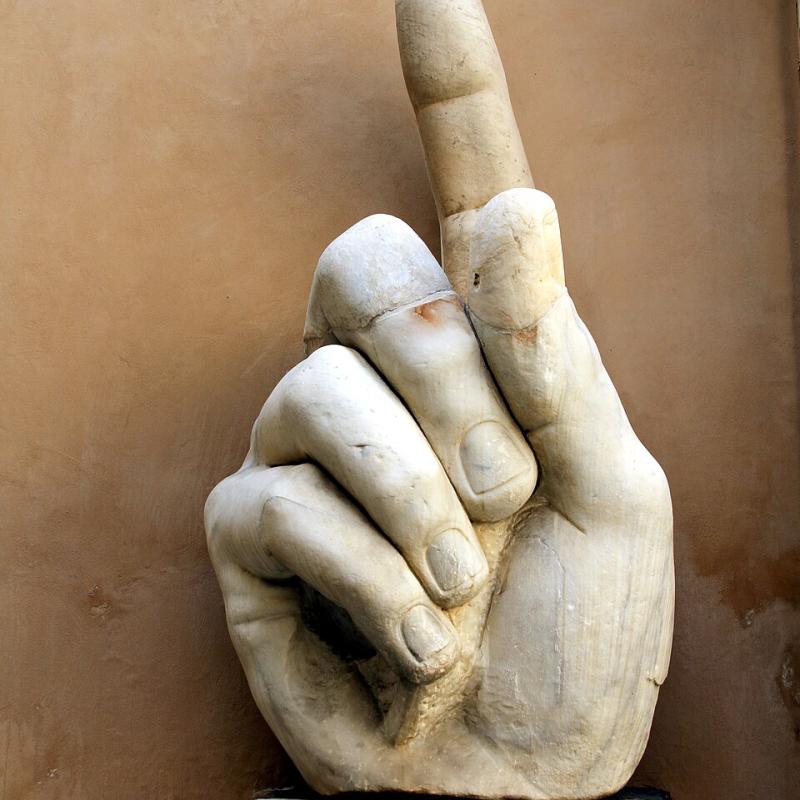
‘Rituals’ likewise offered opportunities for reinterpretation and adaptation in response to contemporary political needs, as illustrated by the place of ancient ceremonies within Augustus’ programme (John Scheid). Similarly, early Renaissance treatises on ancient gods and priesthoods were profoundly shaped by the artistic, literary, religious, and political concerns of their own time (Frances Muecke).
The reconstruction of an urban landscape transformed over centuries made ‘Topography’ a particularly challenging field of antiquarian inquiry. Beyond the fragmentary nature of the surviving evidence, the problem was compounded by the fact that ancient Latin authors could themselves advance bold, and sometimes questionable, interpretations of Rome’s topography (Domenico Palombi), which subsequently influenced both scholarly reconstructions and modern imaginings of the ancient city (Jessica Maier). Distinguishing reliable evidence from inherited assumptions and tendentious interpretations has become a fundamental methodological challenge today, especially for editors of ancient fragments (both textual and material). Because the scholarly tradition – particularly through the mediation of Early Modern antiquarianism – contributed to establishing a received interpretation of certain ancient sources, its lasting impact can hinder, no less than foster, a sound understanding of the classical world (Giorgio Piras).
Finally, the category of ‘Magistrates’ opened up onto questions concerning almost the entire history of Roman political institutions. Later constructions, such as the traditional narrative of the ‘Seven Kings’, incorporated elements of antiquarian knowledge about the early Roman state into a coherent and memorable linear account (Peter Wiseman). The tension between fragmentary evidence and the desire for a continuous narrative is particularly acute where the surviving sources are fundamentally unreliable (Christopher Smith). The reception of such narratives in early modern treatises on Roman magistracies could, in turn, provoke new interpretations and polemical responses. Jean Bodin’s conception of the modern state, for example, may be understood, at least in part, as a rejoinder to Carlo Sigonio’s historical scholarship (Shingo Akimoto).
Although early modern antiquarianism has often been understood primarily in terms of its intellectual debt to the antiquarian scholarship of the late Roman Republic, particularly in its approaches to the production of knowledge about the past, this emphasis on continuity and dependence has tended to obscure the distinctive character of the ancient phenomenon. By bringing ancient and early modern antiquarian practices into direct comparison, the conference sought to move beyond a simple narrative of influence and to identify the intellectual operations through which scholars in both periods selected, organised, interpreted, and ultimately transformed fragmentary evidence into historical knowledge. Such a comparison reveals not only shared methods and concerns, but also the different assumptions and intellectual frameworks that shaped their attempts to recover a past that could never be fully retrieved. In this sense, the challenge faced by antiquarians across the centuries brings us back to Diderot’s image of the scattered fragments of ancient statues: the attempt to restore what has been lost inevitably involves acts of interpretation that may produce something other than the original whole. By illuminating the delicate boundary between reconstruction and construction, the conference offered a first step towards a more nuanced understanding of Roman Republican antiquarianism on its own terms, while opening up broader questions about the ways in which knowledge of the past is constructed.
Valentina Arena is the Camden Professor of Ancient History at Brasenose College. Antonino Pittà is a Researcher in Latin language and literature at the Università Cattolica del Sacro Cuore, where he teaches Latin literature and Modern and contemporary Latin.